
Artist
PARIS, FRANCE
Julien Spiewak
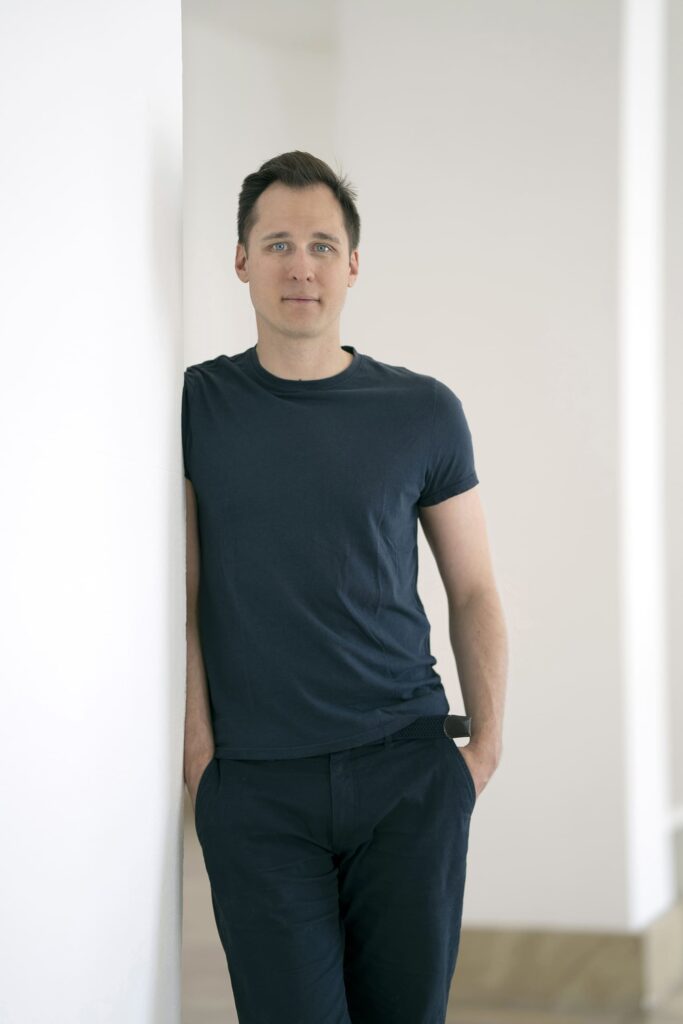
Julien Spiewak (born in 1984) graduated with a Master’s degree in photography, and lives and works in Paris. He is a photographer and researcher who questions the relationship of the photographic image with the human body as an artistic expression. Since 2005, he has produced an uninterrupted series entitled Corps de style, initially in private collections, then in museums. He introduces fragments…
Institutional collections
Paris Museums (France), Arario Museum of Seoul (South Korea), Museum Van Loon (The Netherlands), Prince’s Palace of Monaco, House of Balzac (France), Museum of Art of Rio – MAR (Brazil), Museum of Hunting and Nature (France), Museum of the Romantic Life (France), Doria Castle (Italy), Municipality of Monaco, Siri Sala Private Thai Villa (Thailand).
Books
- Julien Spiewak × Fashion. Text by Marie Simon (French and English). Espace_L Editions, 160 p., 2024
- Julien Spiewak – Monaco-Dolceacqua 500. Preface by HSH Prince Albert II of Monaco. Espace_L Editions, 64 p., 2023
- Julien Spiewak – Le Chef-d’œuvre inconnu d’Honoré de Balzac. Preface by Dominique Baqué. Espace_L Editions, 136 p., 2021
- Julien Spiewak – Corps de style. Text in English, French and Korean. French Institute of Seoul, 48 p., 2014
Solo shows
- 2025Rang Ruam SamaiBangkok, Thailand — West Eden Gallery
- 2025Rang Ruam SamaiBangkok, Thailand — So Heng Tai
- 2024Corps de styleBangkok, Thailand — Siri Sala Private Thai Villa
- 2024Monaco Art Week / Corps de styleMonaco — NM Contemporary Gallery
- 2023Monaco-Dolceacqua 500Dolceacqua, Italy — Castle of Doria
- 2023Monaco-Dolceacqua 500Monaco — Prince’s Palace of Monaco
- 2022Le Chef-d’œuvre inconnuBasel, Switzerland — Art Basel / PhotoBasel
- 2021Le Chef-d’œuvre inconnuGeneva, Switzerland — Espace_L Gallery
- 2021Corpos de estilo, entre Brasil e FrançaRio de Janeiro, Brazil — FotoRio
- 2018Des corps de style – UnseenAmsterdam, Netherlands — Museum Van Loon
- 2018Des corps de style – PhotoEspañaMadrid, Spain — Alvaro Alcazar Gallery
- 2016Des corps de styleParis, France — Galerie phd
- 2016Corps de styleGwangju, South Korea — Centre culturel AF
- 2016Corps de styleParis, France — Bettina Gallery
- 2015Corps de styleGwangju, South Korea — Salt Art Gallery
- 2015Corps de styleDaegu, South Korea — Debec Plaza Art Gallery
- 2015Corps de styleBusan, South Korea — Art Space
- 2014Corps de styleDaejeon, South Korea — AF
- 2014Meubles habillés de corps / allongés sur corpsSeoul, South Korea — Trunk Gallery
- 2014Corps de styleMontpellier, France — Remparts Gallery
- 2009Cuerpo de estilo (2005–2007)Mexico — Fotoseptiembre Festival
- 2009Hommage à Ba JinChâteau-Thierry, France — La Fontaine Museum
- 2008Des corps de styleBrussels, Belgium — Pascal Polar + NKA Gallery
- 2007L’art de l’intérieur, Présence – AbsenceParis, France — Palais Royal, Louvre – Cab
- 2004Entre rêves et féminitésSaint-Cloud, France — Pôle Métiers du livre
Group exhibitions
- 2024Décros, des CorpsGeneva, Switzerland — Espace_L Gallery
- 2024PhotoBasel / Art BaselBasel, Switzerland — Galerie Espace_L
- 2024PhotoBasel – Espace_LBasel, Switzerland — Volkshaus Basel
- 2024MIA Photo Fair – NM ContemporaryMilan, Italy — Milano Congressi
- 2023Roma Arte in Nuvola – NM ContemporaryRome, Italy — La Nuvola
- 2023Corps de styleLondon, United Kingdom — Photo London
- 2023ParallèlesGeneva, Switzerland — Espace_L Gallery
- 2022ComunidadMadrid, Spain — Alvaro Alcazar Gallery
- 2021GVA_RIOGeneva, Switzerland — Espace_L Gallery
- 2020Art Paris Art Fair, Espace_L GalleryParis, France — Grand Palais
- 2019Museum FormsGeneva, Switzerland — Espace_L Gallery
- 2018Salon RevilliodGeneva, Switzerland — Ariana Museum
- 2018La vie des objetsGeneva, Switzerland — Espace_L Gallery
- 2017Feito poeira ao ventoRio de Janeiro, Brazil — Museu de Arte do Rio (MAR)
- 2017Art Paris Art FairParis, France — Grand Palais
- 2017Entre-CorpsGeneva, Switzerland — Espace_L Gallery
- 2016LeopoldinaRio de Janeiro, Brazil — Museu de Arte do Rio (MAR)
- 2016Art Rio – Art Fair, Espace_LRio de Janeiro, Brazil — Pier Mauá
- 2016Art Paris – Art FairParis, France — Grand Palais
- 2016La Couleur de la PeauGeneva, Switzerland — Espace_L Gallery
- 2011Itinéraires photographiques en LimousinLimoges, France — Pavillon du Verdurier
- 2010Prix HSBC pour la Photographie, nomineeParis, France — HSBC, Champs-Élysées
- 2008DéplacementParis, France — Musée du Montparnasse
- 2008Création contemporaineBrussels, Belgium — NKA + Pascal Polar Gallery
- 2008Déplacement – Festival Croisement(s)Beijing, China — 798 Art District, Inter Gallery
- 2007Doucement, nous sommes pressésParis, France — Heartgalerie
- 2007Mission photographique JO 2008Pingyao, China — Pingyao International Festival
Corps de style
Corps de style, this is the title that photographer Julien Spiewak gives to all of his work, since his first works in 2005.
First riddle – there will be others… Because what could a “stylish body” be? A body beautiful enough to be photographed on glossy magazines, or to parade on the catwalks? Not at all: “corps de style” refers to “style furniture”, of the Louis XV type but executed, in the form of copies, in the 19th and 20th centuries.
Spiewak began his photographic quest in private homes, carefully examining their furniture, their personal effects, the layout of the rooms, so much does an interior say something about the person who lives there, like an indirect portrait. Each object there is the depository of a history, of a memory, and it is therefore no coincidence that the owners of these apartments are mostly elderly: they too have a long history, a loaded memory, and they like to tell.
The first photographic essays show their bodies and their faces, obviously dressed, at the heart of this “stylish furniture”: but, very quickly, the photographs run the risk of “making a magazine”. The images are too wise, too conventional. Hence the turn taken by the artist: it is a question of both depersonalizing, introducing a part of mystery, and subverting the convention of these first photographs by introducing, within these apartments somewhat rigid and stuffy, naked bodies. Or, more precisely, fragments of naked bodies.
There can be a certain violence in the fragmentation of a body: one can imagine it damaged, cut, even sliced, mutilated. However, here, it is not so: the body fragments are always of an infinite softness and, although imperfect sometimes, they marry with grace the curve of a sofa, a mantelpiece or a staircase, or even echo the tessitura of a hanging, the veins of a marble. Because here the bodies are not systematically perfect: an attentive eye often discovers on their skin a few superfluous spots, moles, folds and wrinkles.
Spiewak’s modus operandi: the artist always works in situ, calls on model friends, never retouches his images. The shots are systematically frontal. From the intimate decor of private individuals, the artist gradually moved to the public space of the museum: but the museums chosen by the artist have always had the particularity of having been places of history, certainly, but also of life.
Spiewak always proceeds in the same way: on the opening day of the museums, he carries out a meticulous identification of the places, the furniture and their layout, in black and white. Then, in line with a certain classicism formerly linked to the Fine Arts, he draws a series of preparatory sketches, in order to define the framing and the future location of the bodies.
At night, when the museums are closed to the public, the artist, who has therefore previewed everything and who is provided with his preparatory sketches, can finally introduce his models and insert them, in a surreptitious, surprising, sometimes playful way, within the rooms and echoing the furniture: a piece of furniture, a body.
Spiewak’s Corps de style are erudite, cultured, steeped in history and, without any pejoration, they are part of a search for beauty.